Exhibitions
DROP EVERYTHING 2026
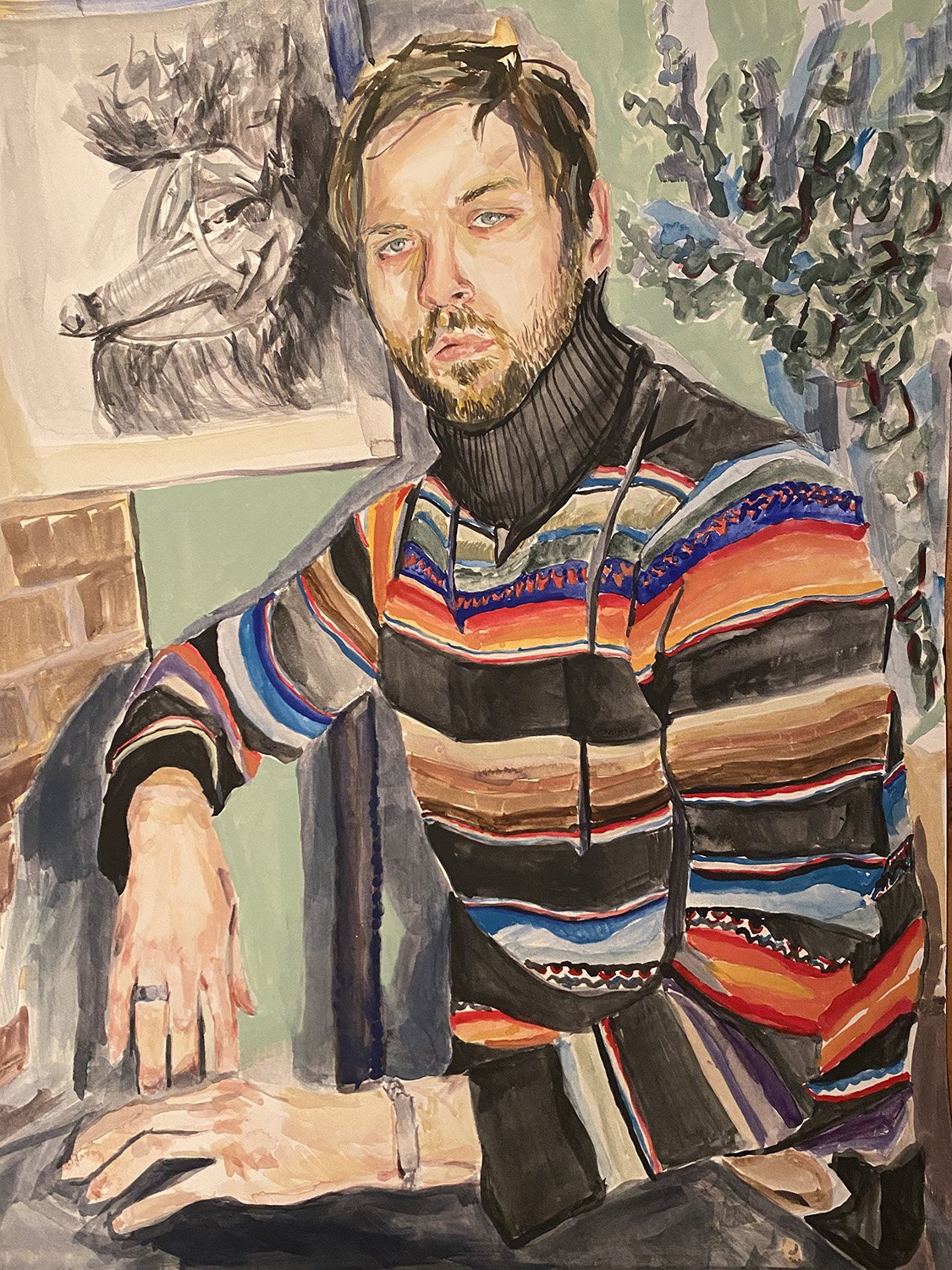
Resident Artist in the fesivalFollowing the passing of Mairéad Bn. Uí Fhlátharta, a renowned Aran knitter and a deeply cherished member of the Drop Everything community, Mary Nally invited me to create a commemorative exhibition to produce portraits of Mairéad’s family members wearing the knits she made for them. I spent two weeks on Inis Oirthir, producing five portraits that were ultimately exhibited alongside the sweaters in a shed adjacent to the house where Mairéad used to knit. This immersive commission allowed me to engage deeply with the family, understand Mairéad’s legacy, and learn the intricate histories woven into Aran knitwear.
FOR THE TIME BEING, ROYAL BEEF GALLERY 2026
Group show

HOLD STILL: AUXIERKLINE 2026
PRESS: DAZED, WHITEHOT MAGAZINE


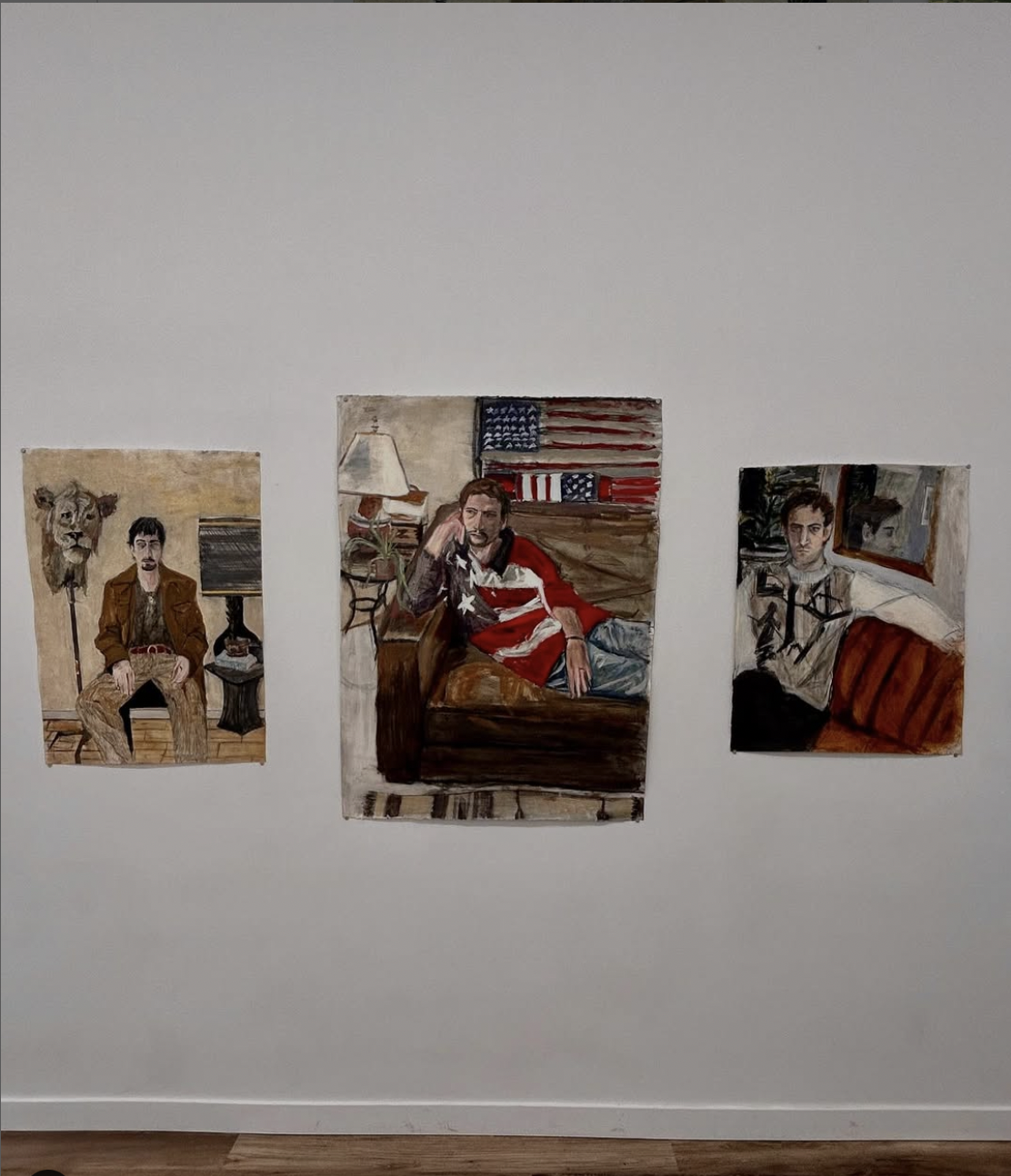
Aidan Lapp has compared sitting in front of him for a portrait to an annual physical. Hold Still, this exhibition’s directive title, extends the metaphor: both portraitist and doctor ask their subjects to remain in position long enough for careful examination (though Lapp admits he only sparingly requests total stillness from a sitter). In the portrait session, as in the exam room, the encounter is diagnostic—a close, sustained looking for changes and details that might otherwise go unnoticed, with the suspicion that they might reveal or clarify something larger. Lapp’s portraits become records of his own community across time; his sitters’ likenesses accumulate year after year, added to their growing file. Since Lapp began making portraits in 2020, each subject has entered his expanding contact book, a log of new proximity and eventual return. Can we consider each first portrait an intake?
Standing among Lapp’s works at Auxier Kline, it is clear that the artist seeks more from portraiture than resemblance. The works, collecting new and returning sitters, are responses to the presences of people he knows, people he will see again. (Recurring visitors to Lapp’s exhibitions will see them again, too, although in a different composition.) The question is not whether each sitter has changed, but how change itself grows visible, and how it is surfaced on paper by Lapp’s hand.
Drawing and painting play distinct roles in this inquiry. While a sitting may take hours, Lapp’s drawings still move quickly, working to keep pace with a body that, inevitably, shifts weight, relaxes and corrects its posture, makes slight adjustments. It is during this phase that the flat page becomes space, and that the space acquires its occupant. In his 1960 essay collection Permanent Red: Essays in Seeing, art critic John Berger describes his experience drawing someone’s portrait, and that, “for a moment, he was no longer a man posing but an inhabitant of my half-created world, a unique expression of my experience.”
Lapp’s drawings seem to recognize a similar dynamic. They are not attempts to arrest a sitter in a fixed pose or to capture them, isolated and complete. The cyclicality of Lapp’s practice—its emphasis on return, on revisitation—abandons this desire for totality. Instead, each drawing marks another entry into Lapp’s orbit. There’s something autobiographical in this, not just because of a visual kinship across the portraits with Lapp’s own resemblance, but because each work registers Lapp’s time spent looking and being-with. As Berger suggests, a portrait becomes an expression of the artist’s experience. Lapp’s subjects are not simply objects of representation in his drawings. With the artist, they cohabit a world realized only through a circuit of presence and creation—of subject and of self—that each act of depiction necessitates.
In Wally, this materializes clearly. The planes of shadow beneath the sitter’s eyes, the light gathering along his brow bone, his intent gaze, and the interlocking of his fingers are rendered with an alertness that feels neither incidental nor overly resolved. Each element seems to arrive through contact rather than chance or invention. The drawing does not circle its subject from a distance; it builds him out from a center, mark by mark, until a sense of interiority emerges—if not psychological, experiential. As Berger suggests, Wally is not the result of a man posing but a co-presence, a realization of form shaped by time spent together between time spent apart.
If Lapp’s drawings establish contact, then his paintings contemplate it. Completed later, alone in his studio, Lapp’s painted portraits unfold slowly and meditatively over his on-site drawings. His process allows for observations to thicken and for reflections—made at a distance—to evolve over the impressions that came before. The result is that the figure, already in place, gains its flesh. Tones are calibrated and established, not by direct reference but through sustained familiarity and rumination.
In Isabel in Chinatown, that familiarity registers as warmth. The surface of the painting seems to hold temperature; color breeds palpable intimacy. The closeness established in drawing moves, in painting, from spatial to tactile—something you could press a thumb into, or pinch. Flesh here is not perfect anatomical accuracy, but density through care, a sense that the figure has been breathed into, rather than colored over.
To be clear, Lapp’s drawings are not preparatory sketches, even those which later receive the treatment of oil paint. Instead, they are works in their own right, and as Berger explains, each of their marks brings the artist “closer to the object, until finally you are, as it were, inside it: the contours you have drawn no longer marking the edge of what you have seen, but the edge of what you have become…until you have crossed your subject as though it were a river.
Lapp’s portraits, across drawing and painting alike, trace this passage. They record not only who was seen but how seeing unfolded—where it entered, lingered, hesitated, and ultimately, arrived beyond. Lapp appears at the center of this social world, not as an observer apart but as someone moving into and through each sitting, met, and then changed.
Lapp’s practice resists portraiture that finishes. It proposes portraiture as follow-up: a return visit, a renewed impression, an ongoing record. The works in Hold Still do not ask what a sitter looks like but how a person finds themselves with Lapp—how presence accrues, a relationship deepens, and change, however subtly, leaves its trace. The encounter does not conclude when the sitting ends; it opens a world that remains within reach, provisional, subject to return.
See you next year.
Natalie Ginsberg is an art historian and dancer specializing in performance, dance, and time-based media. She is currently pursuing an MA in the History of Art in the Williams College–Clark Art Institute Graduate Program.
ON PAPER: AUXIERKLINE 2025
Group show with Milton Sonday, Alexandra Smith, Logan T. Sibrel, Emila Olsen, and Hank Ehrenfried
Install
WORKS ON PAPER: SOOT 2024
Group show with Sakura Abdel-Raman, Josh Alford, Lulu Bonfils, Michael Cuadrado, Alice Gong Xiaowen, Andrew Hildenbrand, Sam Heim, Caroline Hill, Aidan Lapp, Shuyao Huang, Kassia Karras, Naomi Larson, Claire McElwee, Kennedy McNeil, Jeffrey Marchetti, Seiji Murakarni, Ruby Mumik, Mika Nida, Jack Ramsell, Chioe Rees, Luca Rekosh, Ariel Rich, Simon Rosenthal, Cecily Russo, Toni Sennett, Hill Spriggins, Eliana Szabo, Ethan Tate, Poppy Tingley, and Scott Vander Veen
Install


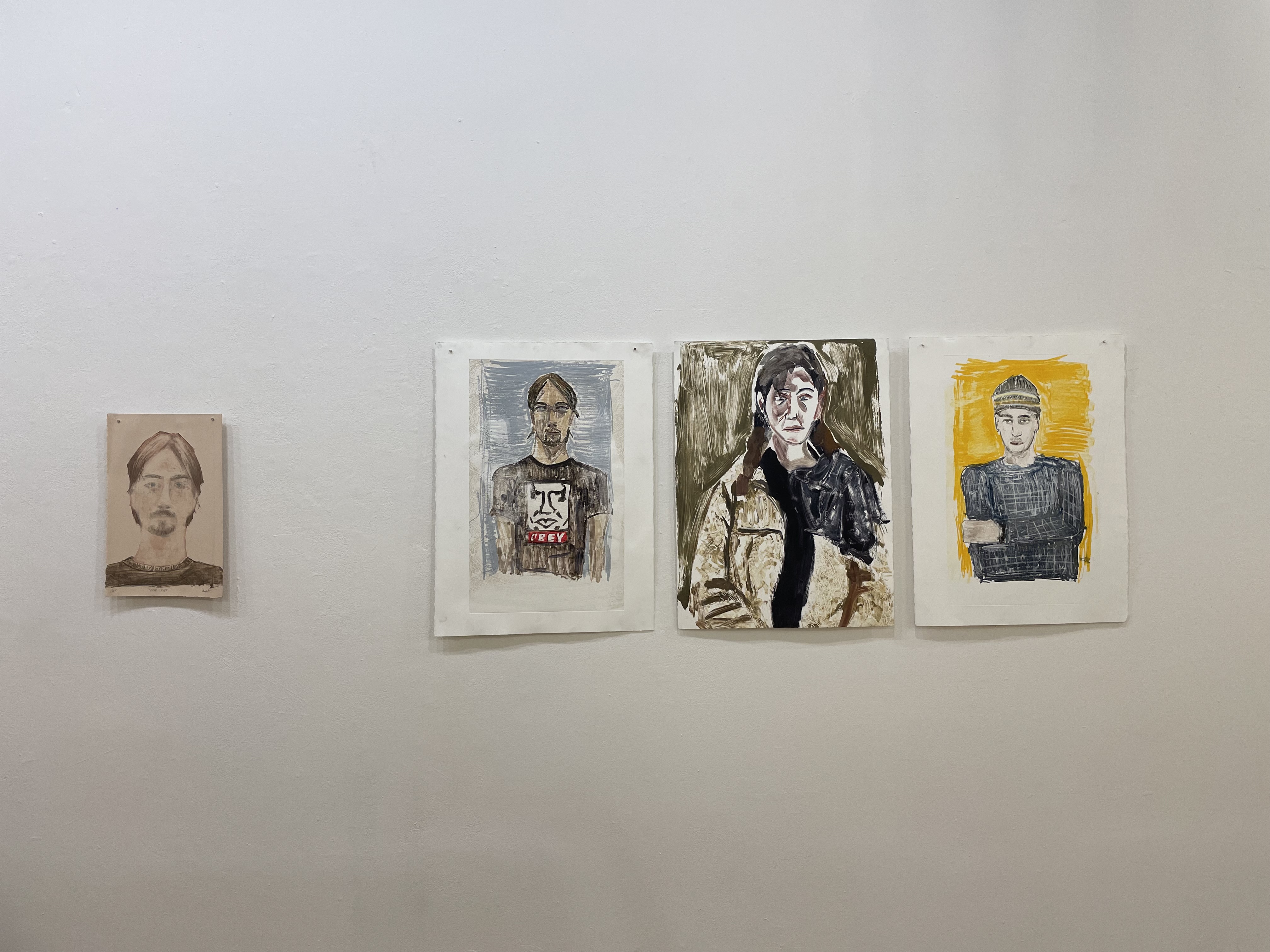
WrittingIn collaboration with SOOT is a new way of mapping information visually. This digital and physical exhibition celebrates the voices of 30 artists under 30 in New York.The physical exhibition is a wide selection of works on paper, from drawing and collage to printmaking and sculpture. Paper finds itself in an interesting place in the fine art world. For some, it is a place that holds ideas for projects“ a preliminary step, or a first draft”; to others, it is a medium of finality. No matter the relationship between maker and paper, there is a direct correlation between working on paper and youth. SOOT allows a wider selection of these artists’ practices to be shown to a global audience. The show was curated with people I knew from school, residencies, fruitful conversations at parties, and word of mouth from others in the show. I am hopeful that the digital components of SOOT, combined with the traditional gallery display let you look at these artists and works on paper and holistic practices in an exciting way.
SOOTS WORK ON PAPERS
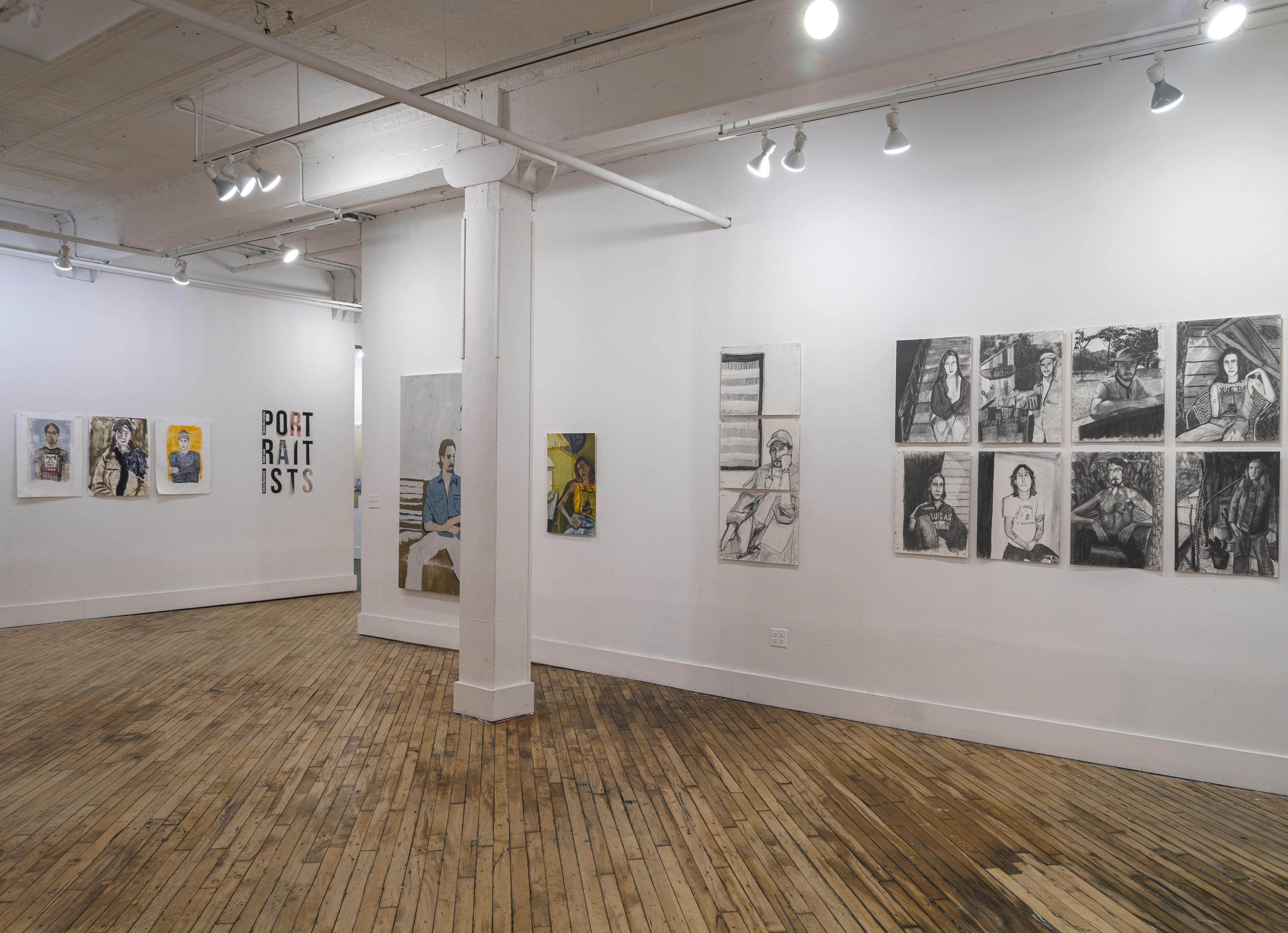
PORTRAITISTS (Pratt BFA) 2023
Group show with Jeffrey Marchetti and Tatjana Mia Cartlis
Install
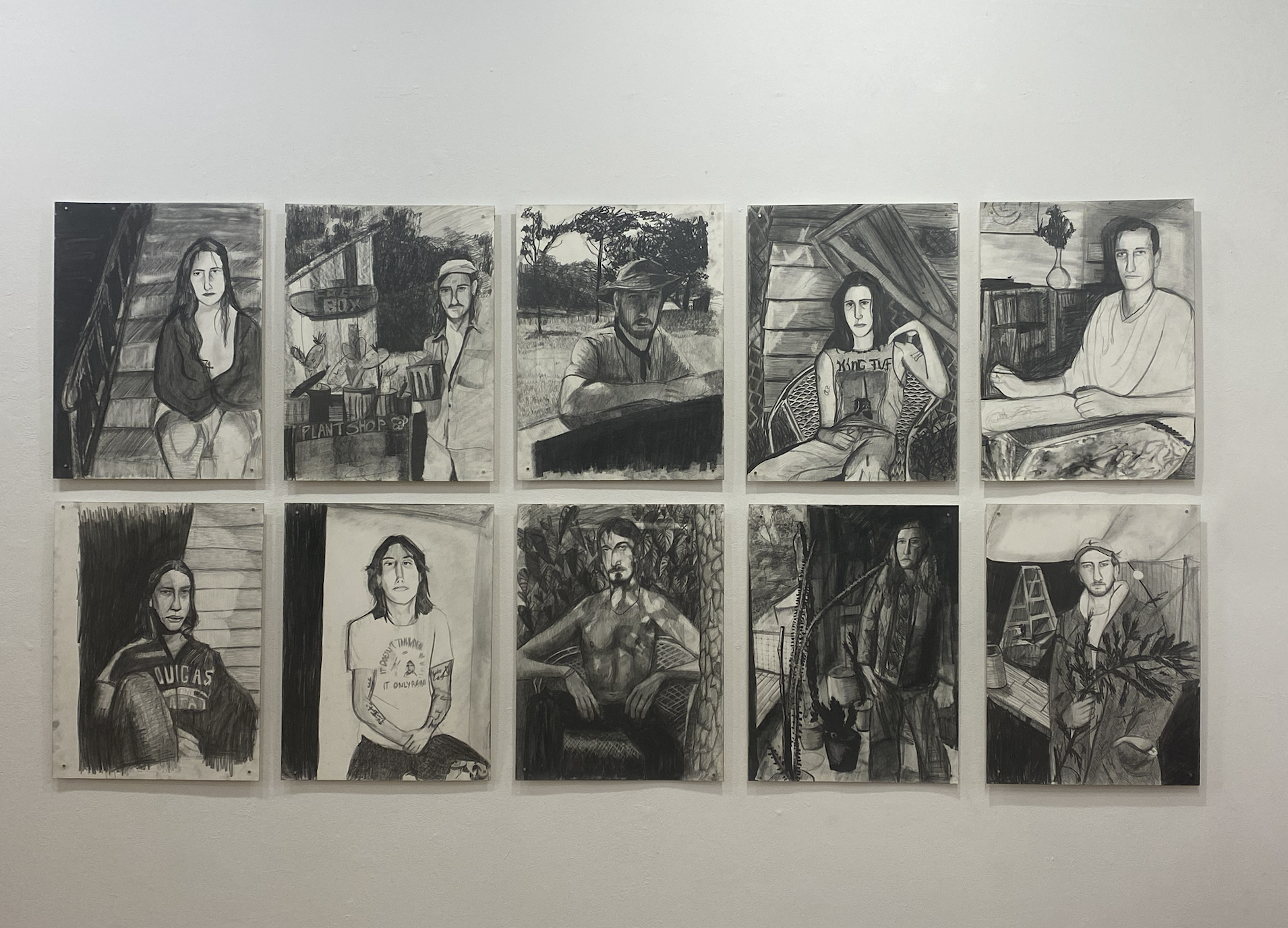
Writing

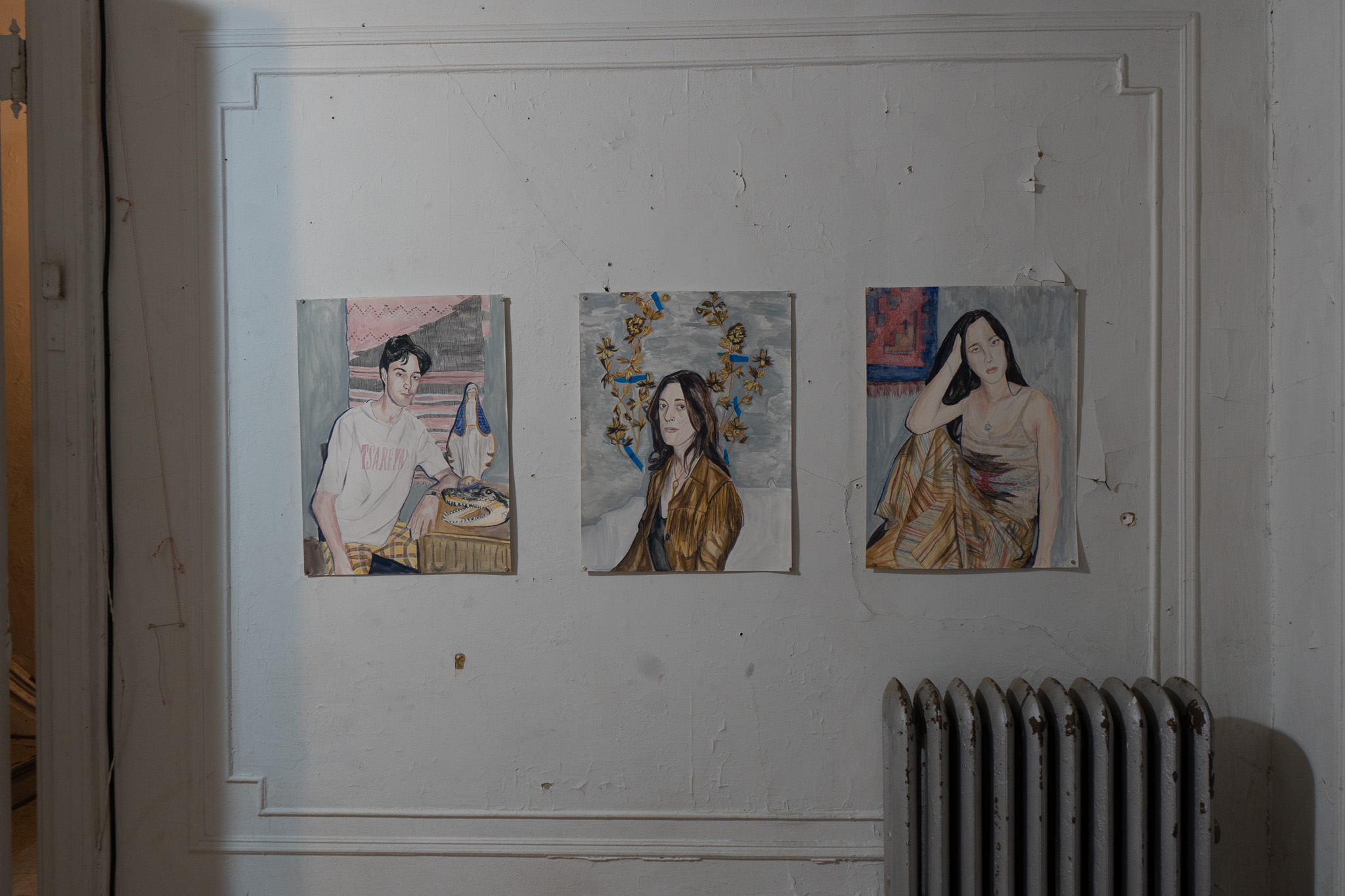
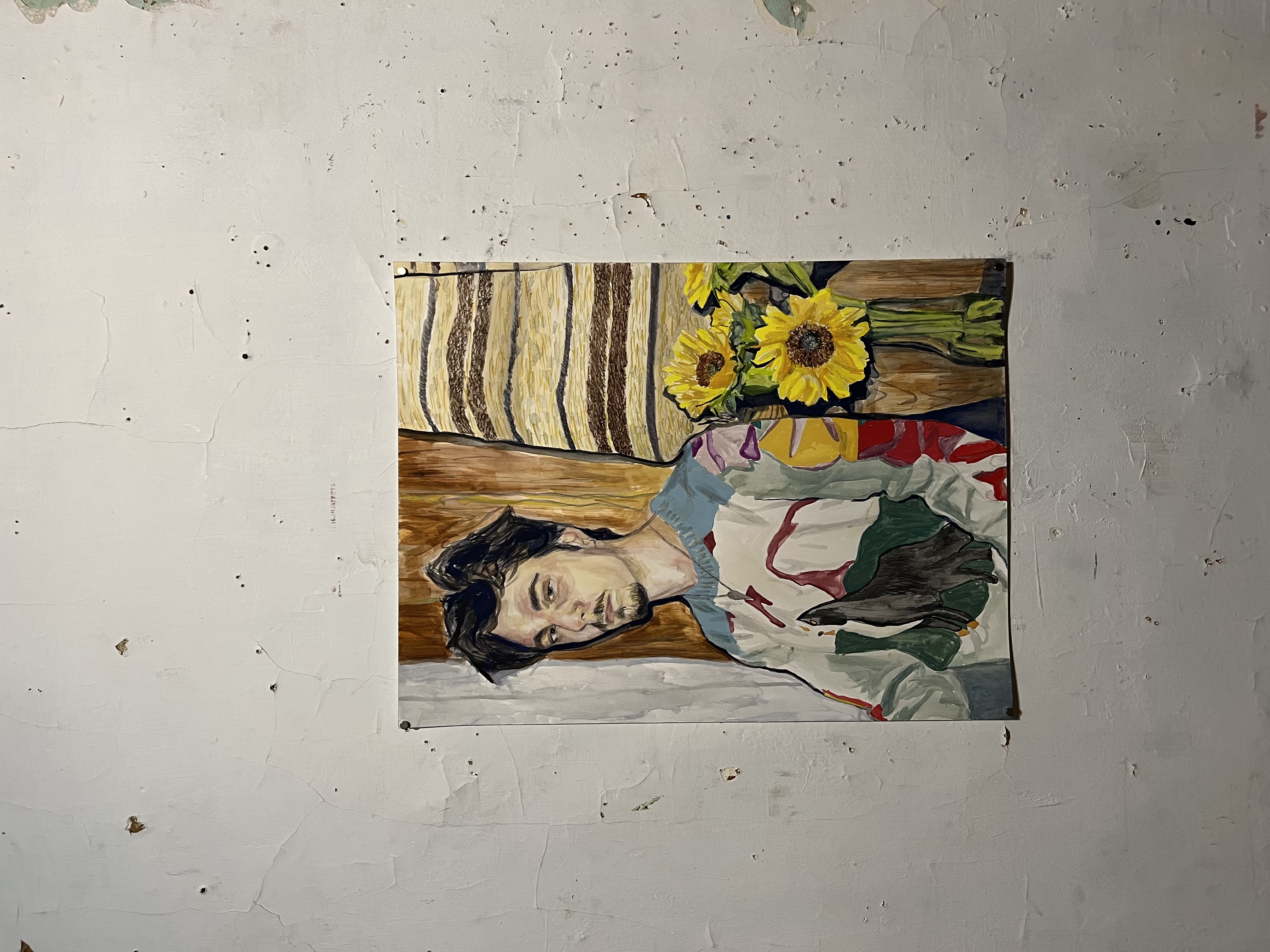

Writing
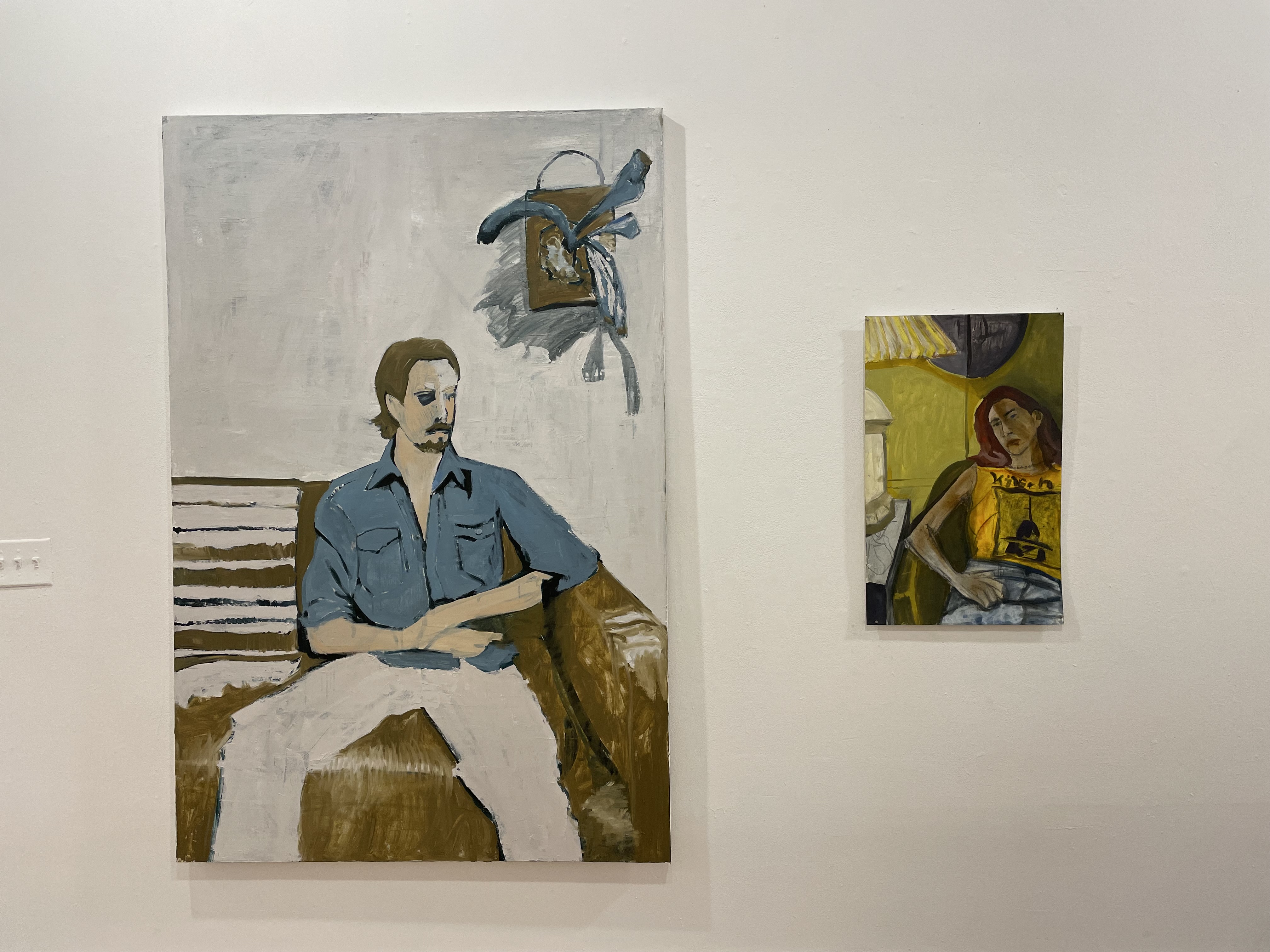
Cohort is the first solo presentation of works by Aidan Lapp, a Brooklyn-based artist and current Senior at the Pratt Institute. Cohort features portraits of the artist and his peers in charcoal and watercolor. Cohort is on view at Room 482 by appointment from November 11 to November 20, 2022. An opening reception will be held on November 11th from 4–8PM.
Room 482 bears witness to the artist’s process. Stray brushstrokes dot the walls, and paint peels off the walls, revealing the outlines of once-mounted frames. Traces of the domestic, too, are present in the converted studio and gallery. It’s only fitting that in this intimate environment, Aidan Lapp shows his first solo presentation of works, Cohort.
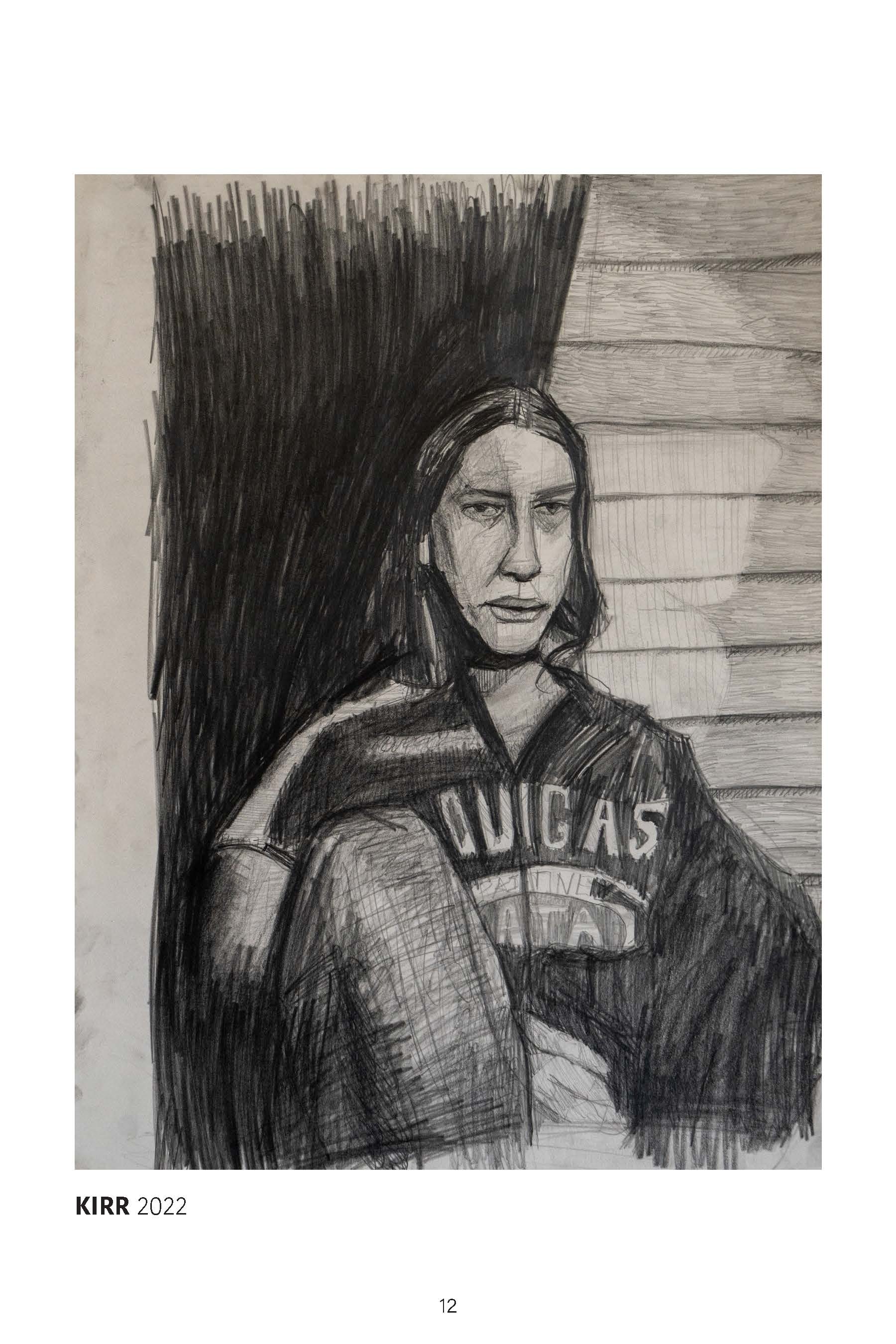
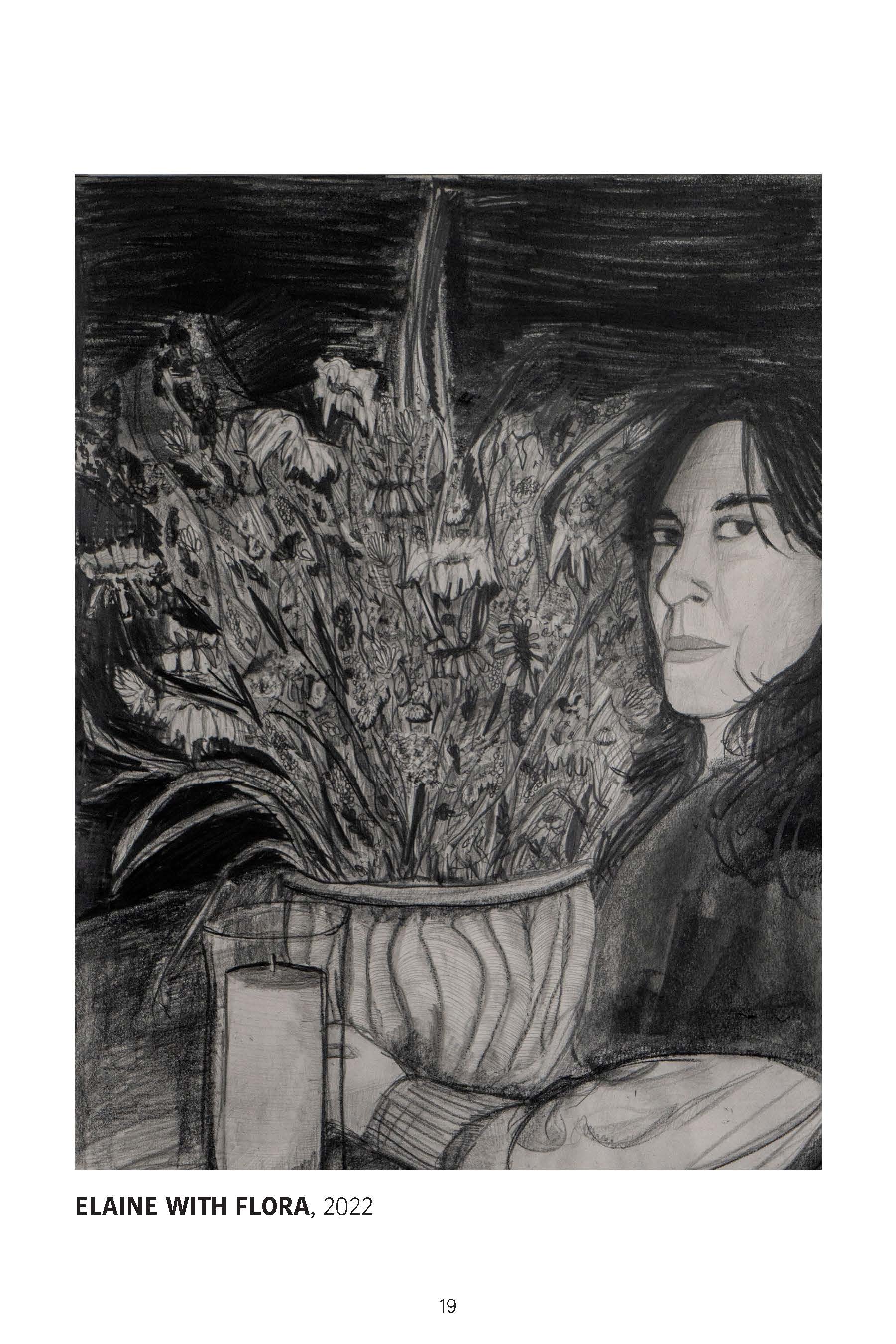
Cohort consists of watercolor and graphite portraits of the artist and his friends and lovers. Lapp turns social gatherings into life-study classes, coaxing Polaroid portraits out of his muses in dramatically-lit bedrooms, his own overgrown backyard that boasts a yurt. These moments of connection feed his practice, and are the basis of the works on view.
Lapp’s exploration of intimacy is nowhere more evident than in his subjects’ expressions. Lida and Lida in Backyard feature the same subject in two different settings and mediums. In both works, the subject’s gaze appears almost distant, disinterested. The lack of expression should not be read as aggression or confrontation, though, but rather authenticity and friendship. In the company of friends and peers, we are free to abandon the performances we play in public spaces. Lapp, with the permission of his subjects, gives viewers glimpses into his subjects’ inner worlds, depicting with care not only their physical forms but also taxidermied crocodile heads and still-wet laundry, hanging dry.
Materiality is of significant interest to the artist, who challenges perceived limitations of mediums like watercolor and graphite. Lapp applies watercolors like oils, bringing out an unexpected vibrancy and opacity from the paints. This technique lends a weight and presence to his works rarely found in conventional watercolor paintings. Lapp’s confident brush strokes weave colors of the Viennese Secession—visceral burgundies, gunmetal blues, decadent golds—throughout his compositions, echoing the artist’s woven garments that clothe many subjects. In this way, Lapp cuts his subjects out of his cloth, creating a tribe, a cohort of otherwise strangers.
The artist’s graphite drawings pose a counterpoint to Cohort’s watercolor paintings. Midtones continue to dominate the canvas, but Lapp exercises less control in his drawings, leaning toward the abstract sketchiness associated with underdrawings. Works in graphite are rarely perceived as finished works; they are, to most painters, a means to an end. Yet Lapp hangs his graphite portraits amongst painted ones, disregarding historical hierarchies of form.
Self in Foliage, and its painted mirror Yours Truly, also demonstrate Lapp’s recent movement towards abstraction. Subjects are recognizably themselves, and yet are interpreted in his new visual code. These abstracted figures are the apotheosis of Lapp’s career thus far, and mark a shift in the way the young artist sees and will continue to see his Cohort.
Isabel Gilmour is a writer based in Brooklyn, NY. She recently graduated from Columbia University, where she majored in Art History.
Booklet






AXA Art Prize 2023
The AXA Art Prize is one of the leading student art competitions in the United States. The competition is open to any style of figurative paintings, drawings, and original printmaking created by undergraduate and graduate art students.
Selected Work